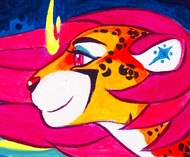
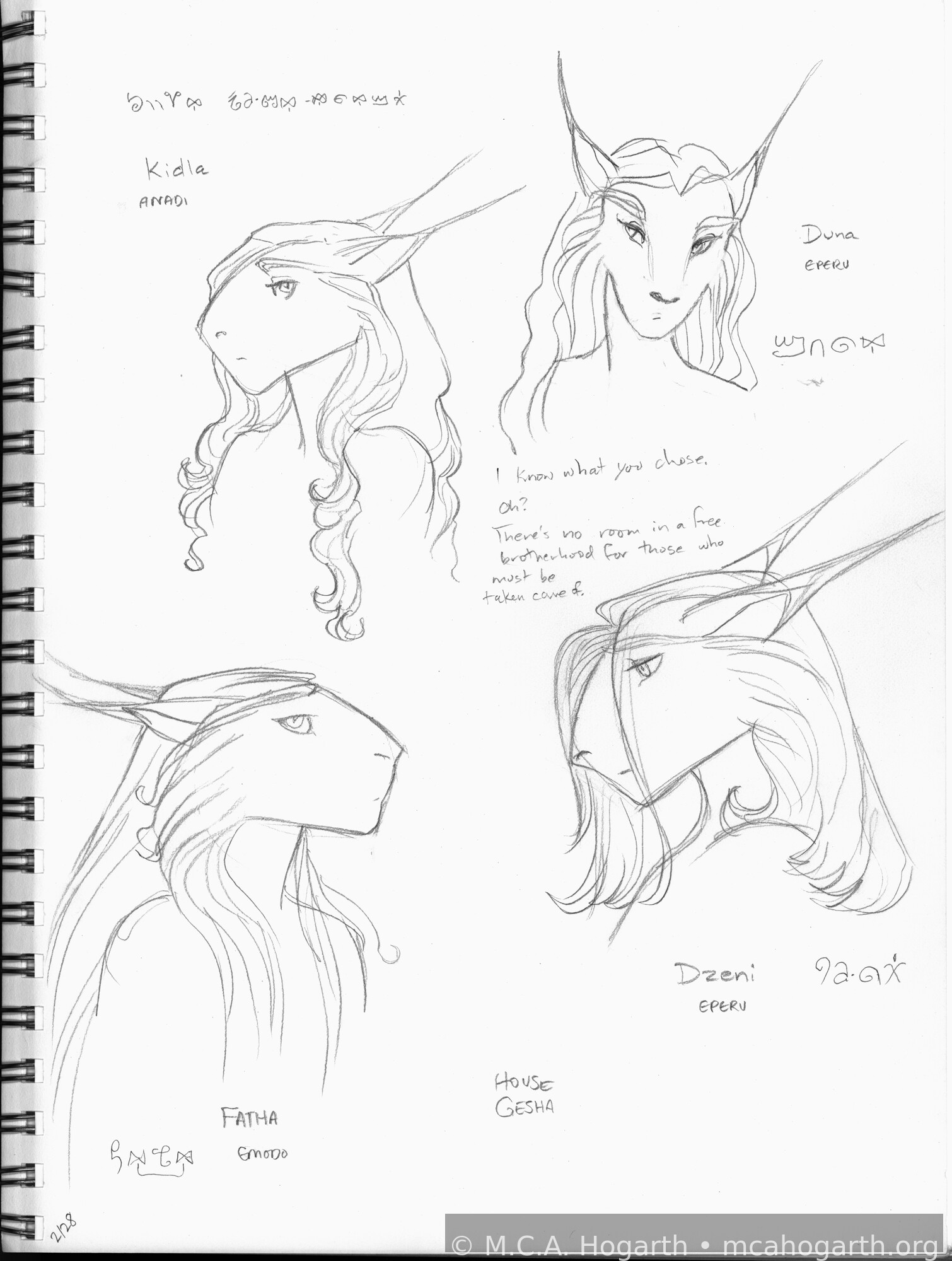
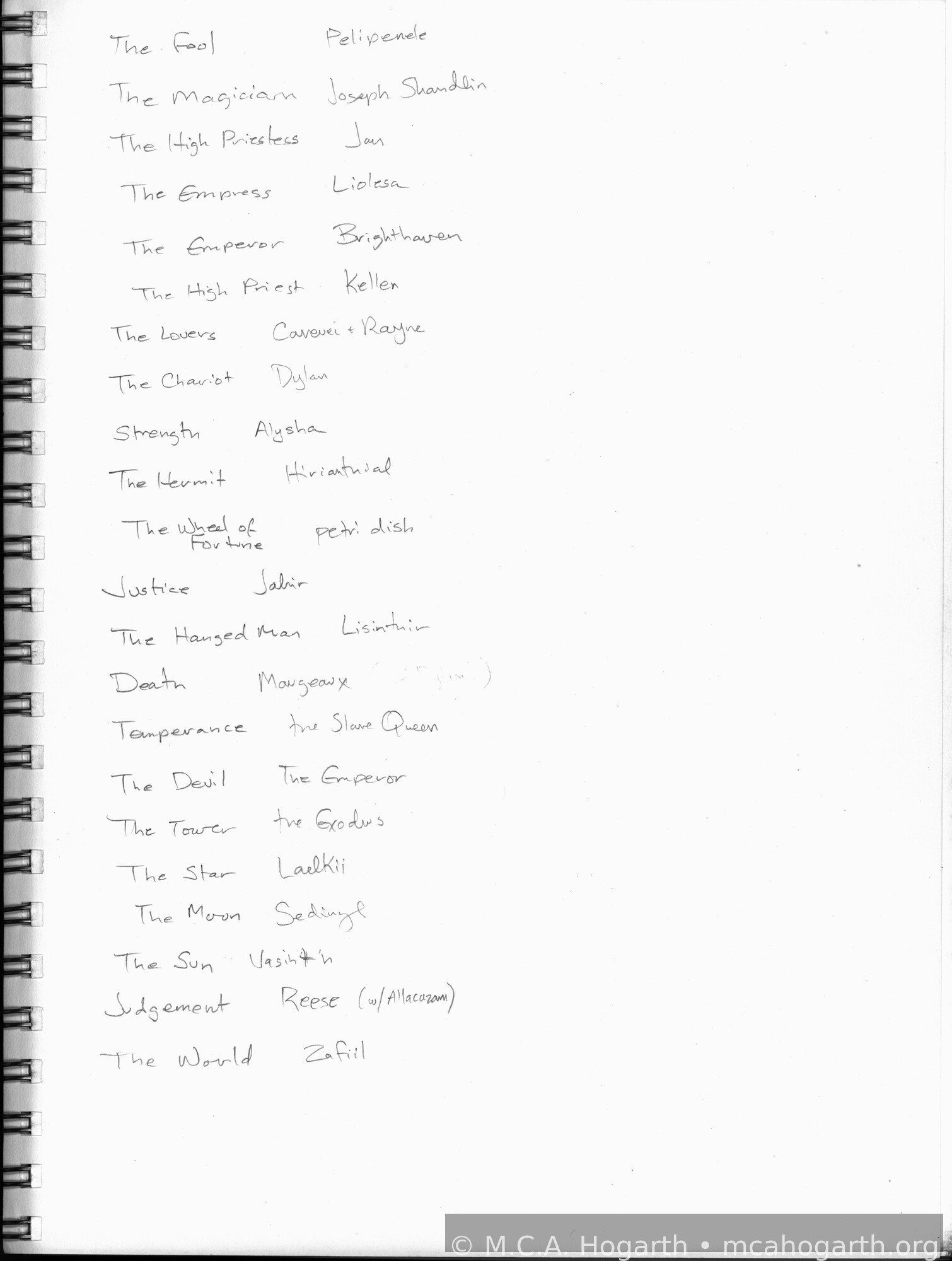
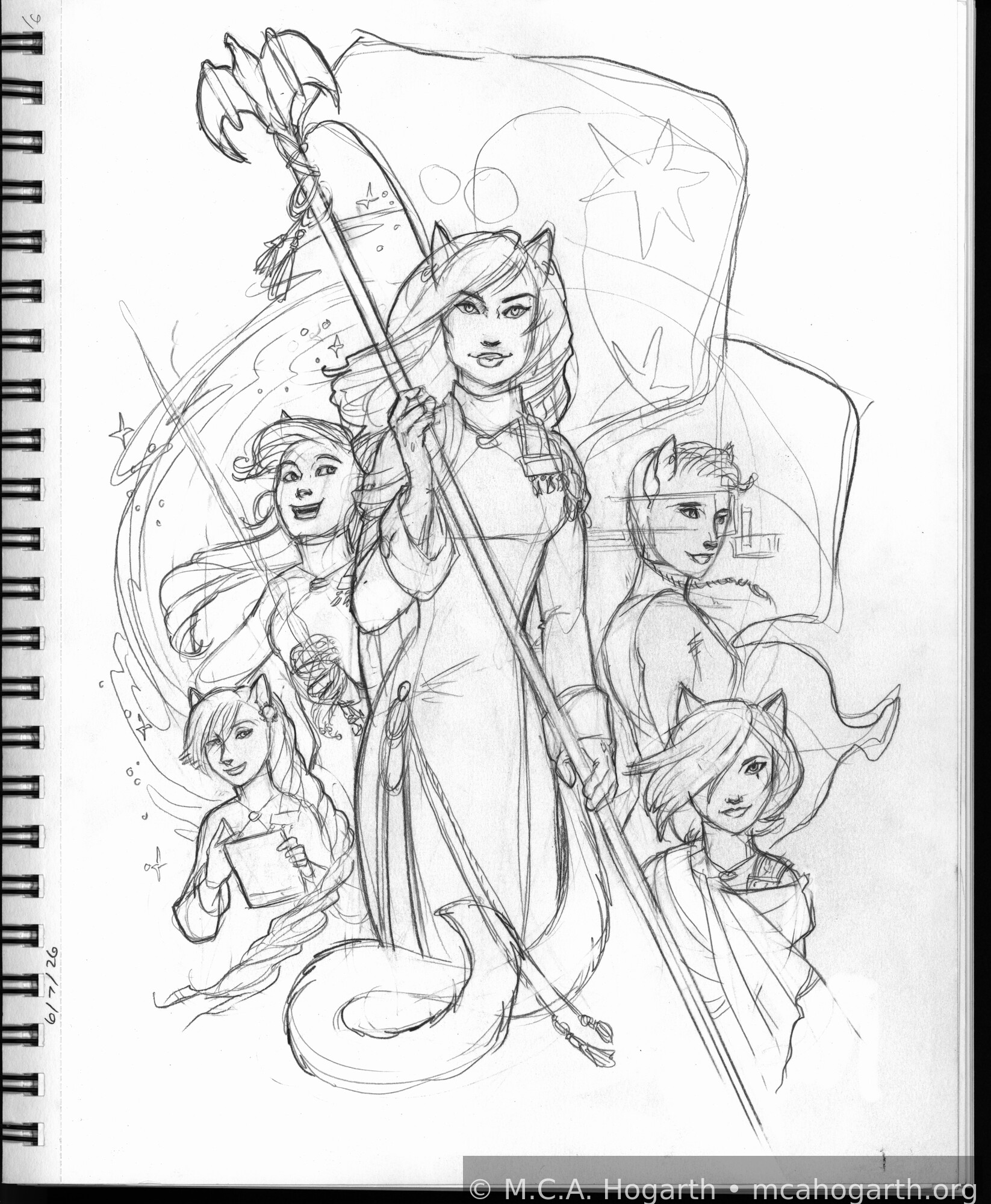
Good news, patrons! The beta for the JOKKA! game is now open! You, as paying patrons, now have early access!
It’s wild to me to realize that my generation was the first generation to grow up with computer games. I had to remind myself that when I was very young, there were no home computers and no consoles and no arcade games, and then, in my lifetime, that became a thing. I lived through that? I lived through that. And then I lived through the era before online multiplayer games and the internet and internet-enabled games!
Can you imagine a world without games? I can’t, and I was born and gamboled through a large part of my childhood without them. Without even the conception of them. Board games, sure. Card games, yes. Social games like bingo and charades… but nothing involving a screen.
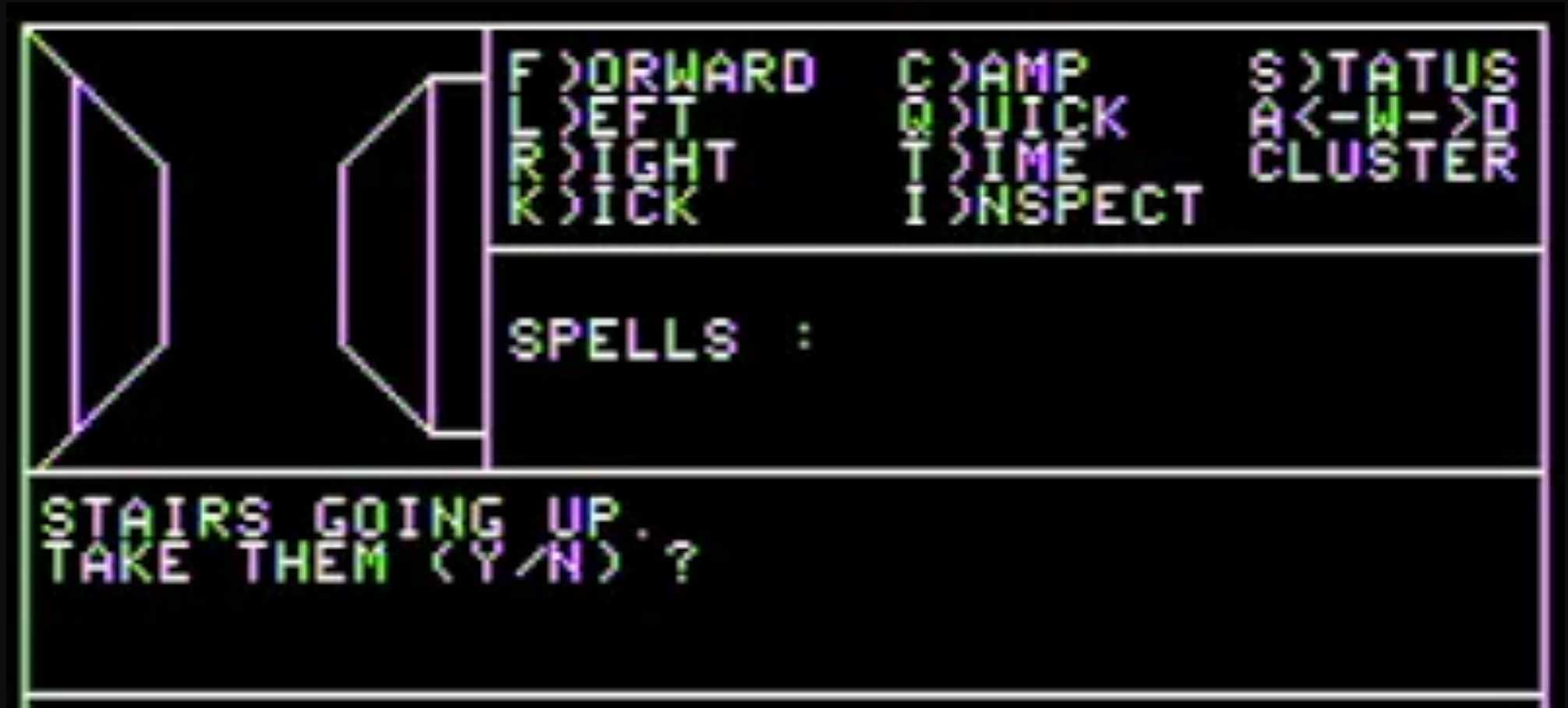
So I grew up with the computer gaming industry. I played the first text adventure games, like Zork; me and my friends played on the first consoles, the Atari and the Intellivision, at one another’s houses; my family gathered around the Apple IIe to watch my father navigate the eerie green line art map of the first installment of what would become the Wizardry franchise. We got to discover the wonder of color computer monitors—I remember loading games on floppy discs that were actually floppy. My engineer father enjoyed technology and science fiction, so as much as possible we got to experience the evolution of gaming and computing and consoles. I had shot ducks in Duck Hunt on the first Nintendo, played wild RPGs like Bard’s Tale, and the first simulation games (SimCity and Caesar I), and on and on, all the way into the internet age where (again!) I wound up playing online text games like Trade Wars and then MUCKs and MUDs, and got sucked into World of Warcraft 2 months after its launch….
It seems strange to realize that I was a gamer before ‘gamer’ was even a term. And a gamer girl, at that!
So to ask myself: ‘why did you decide to write a game’ seems unnecessary. I was a voracious reader growing up… I was also a dedicated game player. The same desire drew me: to be drawn into an experience, into a world that felt real, but stylized in interesting ways. I played all sorts of games, but the ones I enjoyed the most were the ones that allowed me to tinker with a simulated world. The same instinct that makes me want to build universes for my fiction makes me want to build universes for people to interact with, because in the end that’s the thing that I want most: to make worlds. And as awesome as worldbuilding is for fiction, a deft writer is discreet about how the reader interacts with that world, never overwhelming them, and subordinating it to the characters and the story.
But a game! A game can make the worldbuilding the point of the exercise. All the notes you make about the climate and the economy and the social classes, what foods people eat and how they farm and what they use for money and how that’s changed through the course of their history become useful fodder for game mechanics. Very little of it goes to waste. It’s exhilarating.
So, ‘why a game’ from a personal perspective was surprisingly natural: because I grew up playing games. Because I was among the first people to do so, and my memories of games are great ones. I played computer games with my father, with my spouse, with my sister, with my child… with friends who lived near me, and to keep in touch with friends who moved far away. Games are part of the texture of my life.
But that brings me to the other dimension of the question ‘why a game’, because I am a writer and an artist and I have been quietly making money at that gig for two decades now, and you don’t survive that long without being mindful of overall trends. I bought (and still have!) the very first, weirdly shaped slab-sided kindle Amazon ever produced because I said, “This is going to be important.” And the indie revolution that followed launched thousands of authors and made a midlister career possible for a lot of people, me included. Ebooks made reading accessible, easy, and cheap, and books that would never have found their audiences got traction in a marketplace that was still wide open in those early days of the indie revolution. As the market matured, it was harder to reach the income levels of those pioneers, but if you had the guts and the discipline and the ambition, you could still make it.
People have always complained about not getting enough attention, whether it was from tradpub’s marketing department, reviewers and tastemakers, or the algorithm. But lately, the substance of these complaints has shifted from sour grapes to ‘no actually, there is more content out there now than any one human could consume, and it’s harder to be visible in the stew than ever before. So now what?’
Everyone is scrambling for the answer to this question. How do you get discovered? How do you achieve critical mass? Where do you go to find Your People? How do you get people to read you? Talk about you? Recommend you? HOW DO YOU SELL? And that question is going to be answered in the same way ‘how do you build a sustainable career’ was in the past: “everyone’s path is going to be so idiosyncratic it’s going to be nearly impossible to copy.” So as usual, I’m not putting a ton of energy into figuring out how other people are making things work for them. I’m deciding on the gambles I’m willing to take, based on the talents and interests I have.
And I love games, and I build immersive fictional worlds.
Making a game, then, was the obvious next step, not just for me personally, but as a way of branching out into new revenue models.
Why a game, then? Because it’s a novel way to bring my worlds to new eyes. Maybe those people don’t want to read, don’t have the time, or can’t afford it. Maybe those people also love reading and will eventually decide to read my stories. But the Venn diagram of people who game and people who read only somewhat overlaps, and that means the work I’ve already put into making compelling worlds and characters can be put to use in a new way, and maybe lead me to new fans. Bonus: I also draw, and I have a little IT background, so this is an endeavor that uses other talents I already have.
Last October, I thought: “Well… why not dabble a little and see what happens?” And that’s when I started down this crazy road that I hope to tell you more about in future entries of this feature! So stay tuned for the next episode of GameDev Diary, where I tell you how I talked myself into this the same way I talk myself into boarding planes, and how you can use this strategy for yourself to tackle daunting projects. Because contrary to everything this introduction implies, I actually am very skeptical of new things and I’m rarely an early adopter of anything. Until now!

Or at least, I intend it to be relaxing. Hopefully it delivers.
4:22 minutes
Materials:
In which I talk about the paper, the paint, and the experience of oils versus gouache. Fun stuff, will do more.
Thank you Locals supporters! Your contribution to my art war chest here is what's powering these experiments and videos. For now I'm keeping them public but I may start doing some subscriber-only videos if you all are interested.💖
Thanks for your comments yesterday on the business post... all very provocative, in a good way. I'll try to respond to all of them today.
Some Alysha misc now, since I'm gearing up for the results of the Kickstarter!
Petrov is giving away coupon codes for every book in the Alysha series (and has some leftover coupons for Marda and the business book). You can pick those up here (and please do! The books are bought already, someone should use them!) https://twitter.com/PetrovNeutrino/status/1457344535843987461
Our own @JudasComplex sent along a sample of the Faith in the Service audiobook, which I've attached for your delight! I... haven't had a chance to listen to it. Don't ask me about my past week and a half or so. Putting it here will guarantee I get to it.
After hearing the amused comments during the livestream, I went ahead and added all the ship type illustrations I have inked from the 90s to the wiki. Glory in the rampant adorableness of their anthropomorphic stylings! See those ...
A little comedy today, at least in the link. Transcript follows.
Hi, all. Welcome to this episode of The Jaguar’s Heart.
A while back I was introduced to a comedy sketch about Cuban coffee by a Mexican comedian, Gabriel Iglesias. ( The sketch begins with him greeting all his fellow Latinos and then backing up to say ‘but we’re all different, aren’t we’ which is a segue into a demonstration of how different Hispanics speak Spanish.
It is hilarious. First, because I am a Spanish speaker and a linguistics hobbyist, and his portrayal of various accents resonated with my experiences in trying to make sense of them myself… Not always easy, since from culture to culture, slang and accent are often totally different (and sometimes grammar! Spaniards use a grammatical construct that has died out in many other Spanish-speaking countries, the plural “you.”)
I also loved it because the Cuban coffee part is real. I grew up with Cubans. I know how we are....
One of the most common things I hear (and say) right now is "the asymmetry is the story." Here's one about how none of us are innocent of the sins we hate in others.
Hi, all. Welcome to this week’s episode of The Jaguar’s Heart.
It’s been weeks since the Baen’s Bar incident and I’m still thinking about it... because the longer I do, the more I feel, overwhelmingly, that it’s obvious that the problem is deeper than “this forum was saying stuff that offended us.” We have to back up to the glaring fact that people on opposite sides no longer consider each other human. Nothing I say will matter because the people disagreeing with me don’t think I’m human. They have denied my humanity; they have not bothered to listen to my beliefs, or have fake-listened to them in that way that people do when they’re so ready to prove you wrong that they’re only using your speech to provide talking points for their own ideas.
We have forgotten how to listen.
Increasingly, we have also ...
My work schedule with the game goes something like “fix bugs; ship something players have asked for; ship something I want.”
Usually, the things I want feel random, but they’re almost always in service to making the game feel more convincing as a simulation.
This week, in addition to a bunch of features and bug fixes, I made characters able to evolve their interests as they go through life. The first version of the Interest System picked some hobbies for characters when they reached adulthood, based on their aptitudes (or just random chance)… so maybe your Jokkad, on maturation, is now interested in making candy and collecting pebbles, or collecting riddles, or planning caravan schedules (some people’s interests are more practical than others!).
But I love modeling behavior, and it was always my plan for interests to evolve over time.
I put Phase 2 of this feature in this week, and now adults sometimes get bored of stuff they were interested in and develop new interests, particularly...
I used to do a lot more random chatter about stuff I was working on, and I thought, ‘you know, that was fun, let’s do that again.’ So today I want to tell you I put a feature in the game and now it’s already given me too many feels.
The game lets you choose a heart-friend for any character (the onu relationship that we see, most obviously, in Pearl in the Void between Keshul and Dekashin). But it “creates” new friendships organically for your characters without your consultation based on their personalities and jobs and interests. These are called ‘drift-friends’, and if those characters stick around in your clan long enough, they’ll hang out together and go from being acquaintances to best friends.
Good enough. But then I thought, ‘but what about childhood friends!’ So I put in something that allowed characters who are youths together at the same time to have a chance to become childhood friends. These friendships form with messages that persist so you can look back ...

Good news, patrons! The beta for the JOKKA! game is now open! You, as paying patrons, now have early access!
Over the weekend, I read a book that I’m 95% sure was AI-written. I’ve listened to people talk about how it’s done: you brainstorm characters and a plot with AI, prompt it for an outline, adjust the outline, prompt it to create character and setting guides… attach all that to your project, then tell it to write the first chapter. You adjust the chapter, add it to the project, then tell it to write the second, etc, until you get to the end. Then you tidy the whole thing and publish. The "rapid release" people either love this (because you can release a book in a day or two and do it again immediately) or hate it (because they can't keep up with people using this strategy with unaugmented human brains). But it's clearly a thing that's happening, and few people who do it are admitting it.
Reasons I thought this book was AI:
Every chapter ends with a weird wrap-up style: “Main Character had accomplished XY and Z. Tomorrow, he’d have to tackle AB and C. But for today: job well done.” And I do mean every chapter. At first I thought ‘maybe the author’s serializing this and needs to remind readers about what just happened” but when it’s doing overviews of what happens in the chapter at the end, it’s weird.
All the places give you a “movie set” feeling of being wooden facades. Like… ‘there’s a baker. He makes bread.’ Nothing else. Only bread is mentioned. Not even the kind of bread. There’s a weird lack of specificity to everything. The baker always has a ‘basket of bread’. Or occasionally, a basket of pastries. (No word on what kind.) Likewise, there is a blacksmith. We know he can make hammers, because the apprentice made one. But that’s it. No idea what else the blacksmith does for the town.
Then there’s suddenly spates of specificity. “I have these exotic spices that sound like a list generated for game inventory.” These specific things are never mentioned again.
The technobabble sounds like stuff Claude gives me as placeholders. “Mana structure efficiency at 45%. Suboptimal but holding.”
Similarly there are some odd verbal tics that repeat throughout the text, and they are suspiciously clever ones, like analogies that rely on an abstract and a concrete noun: “It tasted of cinnamon and regret.” “The tavern smelled of old ale and worry.” Even the title uses this phrasing. Authors can have verbal tics, of course, but I associate a lot of these with AI.
The supporting characters do the exact same things, as if they’re programmed NPCs. Celebrating an achievement? ‘We go to this exact same tavern, every time.’ Checking up on the main character? “You need food and rest.” (I can’t count the number of times this character suggested everyone have food and rest, in exactly those words. No variation.)
This one is hard to describe, but the characters have believable backstories that suggest depth, but these backstories do not inform how they interact with other characters. The nemesis becomes the protagonist’s friend based on a single interaction, and this backstory, while mentioned in subsequent chapters, causes no friction, for instance. It’s as if every character was created in isolation and the author can’t figure out how to make them combine.
Could this all be the work of an inexperienced author? Sure. But that tells me that we have trained AI to work off story templates that inexperienced authors also rely on. If you have decades of “write to market” advice that treat books as widgets with “story beats” and “character arcs” that can be abstracted into formulas, you shouldn’t be surprised when books start to sound alike. They already were, prior to AI, it’s just that AI makes creating them faster.
Did people like the AI-generated book? Well, it has over a hundred reviews and a 4.5 star average rating, and even on Goodreads, it's doing well, so the answer is: “Yes, it’s good enough.” Did the author confess to AI-writing it? No. Maybe he didn’t! But my guess is that he did.
Do I care about this? Not really. I didn’t enjoy reading it because it gave me the same feeling social media scrolling does, that I’ve eaten empty calorie food that’s programming my brain to repeat basic and uncreative patterns. But humans have always riffed off bad things to make better things and I can totally see someone using AI to generate a draft like this, and then completely overhauling it into something enjoyable.
I don’t write like this because I’m weird. I am constitutionally incapable of the ‘write to market’ formulaic approach (which is why I’m not on a yacht sailing to my property on the Riviera). Even my attempts at romance and litrpg novels veer off into directions that make them too odd (yes, I managed to make both these genres unprofitable). But I’m one of those capital-A artists that indies like to sneer at, and I’m happy that way. I can’t even do that right: I’m an Arteeste who doesn’t care if you’re using AI!
My audience was always going to be the weirdos who want to learn my conlangs and vanish into alien cultures so completely they leave no traces. That's you all! You're awesome.
But yeah, AI-written books. You might have already read one and not realized it. The name of this one, if you want to check it out, is below, and yes I paywalled it because I don't want to bother with drama.
Red Honey has wrapped up! I’m not sure what I’m going to serialize next, but I figured I’d take a breather for the rest of the year since there’s so little of it left. We’ll continue to have Back-in-Time Tuesdays every week, but Fridays will be a hodgepodge of whatever’s on my mind. And what’s on my mind today is the Jokka game, which my Discord crowd has convinced me to just call JOKKA! (I think with exclamation point. With exclamation point, right, you all?)
I think I last seriously wrote about this around my birthday so it’s been almost two months. A lot happens in two months when you’re directing AI to code for you.
The foremost thing I’ve learned is that I am perfectly positioned to take advantage of AI for coding, because I have these things going for me:
I used to write technical documentation for software
I can do project management
I can draw
I can write and have written many novels' worth of material for background
I have done some light coding work
I like gaming and have played many games mindfully, noting what I hate and what I enjoy
But the number one thing that makes this easy for me is: